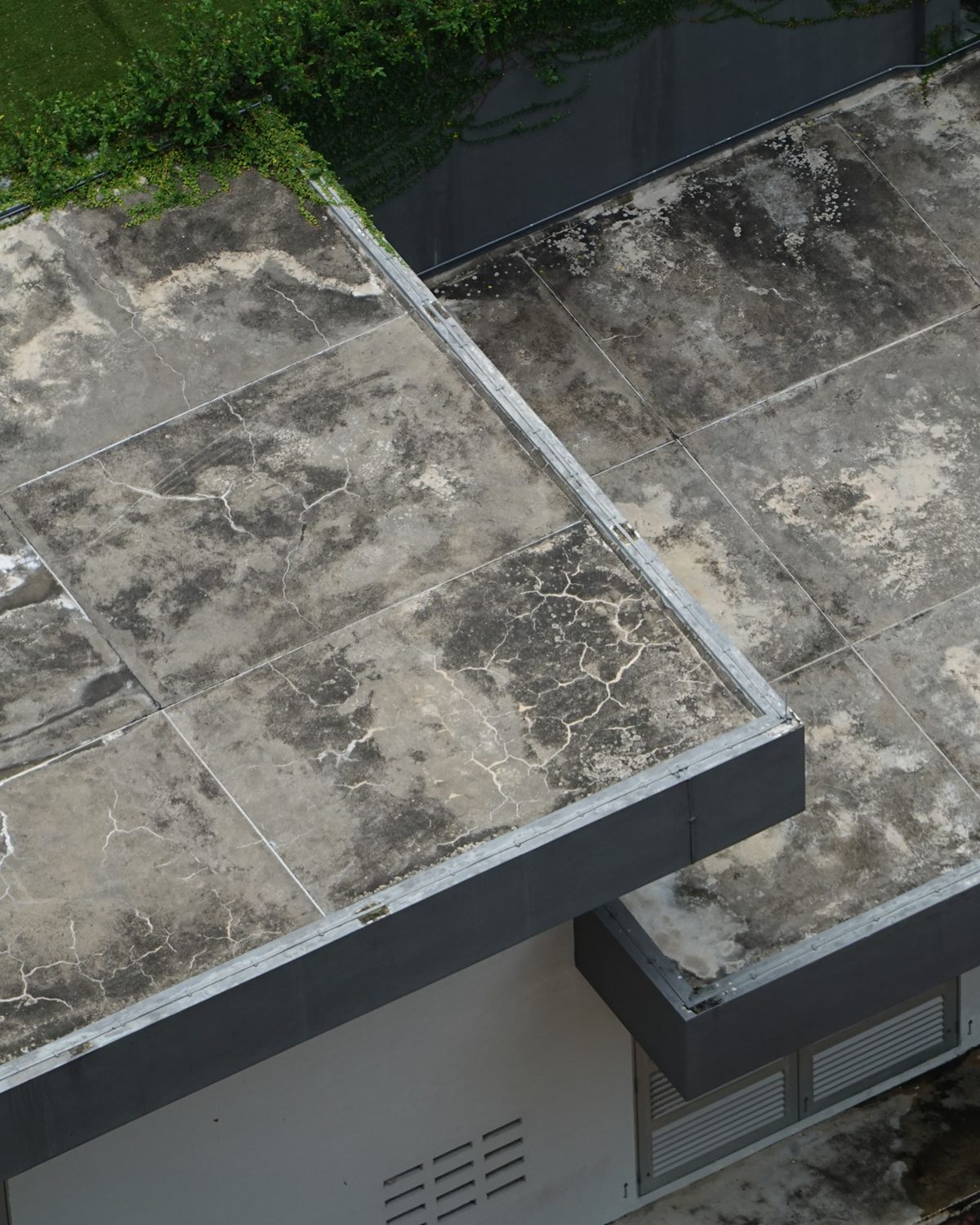
A roof inspection is a structured check of a roof’s condition by a trained inspector. It tells you whether the roof is watertight today, what is wearing out, and how much life it has left. Done properly it ends in a written record, not a verdict delivered from the ladder.
That record is the reason to bother. A roof is usually the largest single repair a building faces, and it fails slowly and invisibly until it fails suddenly and expensively. An inspection turns that into something you can plan for.
What an inspector looks at
- Membrane or roof covering: splits, blisters, missing or cracked materials, worn surfacing
- Flashings: walls, curbs, chimneys, skylights and edges
- Penetrations: pipes, vents, conduit and supports
- Drainage: drains, gutters, scuppers and signs of ponding
- Structure: sagging, soft areas and deck damage where visible
- Interior: ceiling stains, attic moisture and daylight through the deck
The pattern behind that list is worth stating plainly. Most leaks start where the roof meets something else, not in the open field. Edges, curbs, drains and penetrations are the places the covering is cut, turned up and sealed by hand, and hand work is where failure begins.
How a typical inspection runs
- History first. Previous reports, repair records, warranty paperwork and a list of interior leaks.
- Interior walk. Stains, damp and deck staining seen from below, which tells the inspector where to look hardest.
- Roof walk. Perimeter, then the field, then equipment areas, photographing defects with a locatable reference.
- Testing, if needed. Probing seams, moisture readings, or a scan booked for the right conditions.
- Debrief. A plain summary of what was found, before anything is written up.
- Report. The findings, ranked and located, usually a few days later.
Who needs one
| Situation | Why |
|---|---|
| Buying a property | The roof is one of the largest near term capital costs |
| After a storm | Hail and wind damage is easy to miss from the ground |
| Insurance renewal | Some insurers ask for proof of roof condition |
| Routine care | Small defects found early cost far less to fix |
| Before a coating or restoration | Coating over wet insulation wastes the whole investment |
| After trade access | A service visit to a rooftop unit is a common source of new damage |
Visual inspection and beyond
Most inspections are visual. When the inspector suspects hidden water, they may add testing methods such as core samples, moisture meters or an infrared scan.
The distinction matters because the two answer different questions. A visual walk tells you what is wrong with the surface. Testing tells you how far water has already travelled inside the assembly, and that is the number that decides between repair, restoration and replacement. A recommendation to replace a roof without any testing behind it rests on an assumption, however experienced the person making it.
What the inspector needs from you
An inspection is far more useful when the inspector arrives informed, and the information costs you nothing.
- Previous reports. The last one turns this visit into a comparison rather than a fresh start.
- Repair history. Knowing where the roof has been patched shows where to look at the patch edges.
- Warranty paperwork. It decides whether cores can be cut and who is allowed to touch the roof.
- Leak history. Dates, locations and the weather at the time. Water that only appears in wind from one direction points somewhere specific.
- Access details. Hatch, ladder, lift or escort, plus any site safety rules, so the visit is priced and planned properly.
Hand that over at the start of the visit rather than mailing it afterwards. An inspector who knows a particular ceiling tile stains after heavy rain will spend their time above it instead of finding it by chance.
What an inspection will not do
An inspection is a condition check, not a repair and not a guarantee. It will not make the roof watertight, and it will not tell you what the work costs to the pound, because that depends on what a contractor finds once the roof is opened. It also describes one day. A roof inspected in February and hit by hail in April needs looking at again.
What you should get
A written inspection report with photos, a list of defects ranked by urgency, and an estimate of remaining life. Insist on locations you can find again and a statement of what was excluded from the scope.
Download our commercial roof inspection checklist to see every item a thorough inspection should cover, and read what an inspection costs before you ask for quotes.
Common questions
How long does a roof inspection take?
A small residential roof often takes under an hour on site. A large commercial roof with core samples or a moisture survey can take most of a day, and a very complicated one takes several visits.
- Time on the roof tracks area, section count and how much testing is included
- Sorting photographs, marking a plan and ranking findings takes as long again
- On a large building the desk work takes longer than the walk
- That is why a written report arrives days after the inspector leaves
- An infrared survey often needs a second visit on the right evening
Ask two separate questions when you book: how long will you be on the roof, and when will the report arrive. Anyone promising a full commercial assessment in an hour is skipping the details or skipping the document.
When should I get a roof inspection?
Before buying or selling, after a major storm, before a warranty expires, and on a routine schedule, usually twice a year for a commercial roof.
- Add a check after any trade has worked up there
- A fall inspection clears drainage before the wet season
- A spring inspection finds split seams and flashings that moved under snow and ice
- Two visits a year produce a comparison, which a single visit cannot
- A comparison is the only way to tell a stable defect from a spreading one
The event driven inspections have deadlines. A storm inspection is most useful within days, while the damage is fresh and the date is easy to evidence. A warranty inspection needs time left to raise a claim, and a purchase inspection has to fit the diligence period.
Do I need to be there for the roof inspection?
You do not need to be on the roof, and in most cases you should not be. Meet the inspector at the start, then be available at the end for a walk through.
- Bring previous reports and the repair and maintenance history
- Bring the warranty paperwork and a list of interior leaks with dates
- An inspector who knows a tile stains after west wind looks at that parapet differently
- At the debrief, ask what worried them most and what they are unsure about
- Ask what they would do first with their own money, and note the answers
A report is written in careful language and a person is not, which is why that conversation is often the most useful fifteen minutes. Check the written report says the same things, because a gap is worth raising before it is finalized rather than a year later.
Can an inspector tell me how many years my roof has left?
They can give you an estimate with reasoning behind it, and you should treat it as a planning figure rather than a prediction.
- It is built from system type and age, and membrane and detail condition
- It also rests on how much moisture is in the assembly and how it was maintained
- Press for the reasoning rather than the number
- An estimate resting on seam condition and a moisture map can be argued with
- A number offered without moisture testing is a guess about what decides the answer
Two roofs the same age can be years apart on drainage, traffic and how fast small defects were fixed. The practical use is budgeting: several years left justifies maintenance spending, while a roof near the end justifies planning a replacement. Ask which position you are in.
What is the difference between a roof inspection and a roof survey?
The words are used loosely and often interchangeably, so the label matters far less than the scope.
- In general use an inspection is a condition check of the roof as it stands
- A survey suggests measurement: a moisture map, or dimensions and build up
- The terms are not standardized, so ignore the name and read the scope
- Ask what will be walked, tested and measured, and what the document contains
- Condition assessment, condition report and certification are used just as loosely
Two firms can sell you the same word and deliver very different work, and the difference usually shows in whether anything was measured. Get each provider to describe the deliverable in writing before you compare prices. A cheaper quote often means a narrower scope.