This is an inspection checklist for a commercial metal roof, standing seam or through fastened. It is organized by joint and fixing rather than by area, because that is how metal roofs fail.
Work along the lines: eaves, then laps, then fasteners, then penetrations, then ridge and terminations, then inside.
Before you go up
A metal roof is a fall risk and a fragile roof risk at the same time. Step over purlin lines, never on a rooflight, and never on a panel of unknown age or gauge.
Take a camera, a roof plan with the purlin lines and rooflights marked, and binoculars for anything you should not walk to.
The fasteners
| Look at | What a problem looks like |
|---|---|
| Fastener heads | Standing proud, backed out, overdriven into the panel |
| Washers | Split, hardened, flattened, squeezed out or missing |
| Rust staining | A ring around a head, or a run down the panel below it |
| Hole condition | Wallowed or oversized, so the fastener no longer seals |
| Patterns along a line | Several failures following a purlin run |
| Missing fasteners | Empty holes, or a fixing replaced by sealant |
The laps
| Look at | What a problem looks like |
|---|---|
| End laps | Opened, lifted, sealant squeezed out or absent |
| Side laps | Gaps, daylight, a lap that has lifted along its length |
| Lap sealant | Hardened, cracked, shrunken or never present |
| Capillary action marks | Staining running back up a lap against the fall |
| Seam condition on standing seam | Seams unclipped, rolled open, distorted |
| Distortion and oil canning | Panels buckled, which usually indicates restraint |
The penetrations
| Look at | What a problem looks like |
|---|---|
| Pipe and cable penetrations | Mastic as the only detail, a collar standing away |
| Later additions | Anything cut in after the roof, with no proper flashing |
| Curbs and units | Flashings slipped, upstands too low, fixings through the pan |
| Rooflights | Crazed, cracked, flashing lifted, fixings corroded |
| Vents and extracts | Loose, corroded at the base, sealant failed |
| Snow guards and fixings | Fixed through the panel without a detail |
The edges and terminations
| Look at | What a problem looks like |
|---|---|
| Ridge and hip | Fixings loose, filler blocks missing or degraded |
| Verges and barge details | Lifted, corroded, fasteners pulled |
| Eaves | Cut edge corrosion, panel ends distorted or lifted |
| Gutters | Debris, standing water, corrosion, joints opened |
| Abutments and upstands | Flashing short, sealant failed, no proper cover |
| Valleys | Debris, ponding, corrosion, inadequate upstand |
The corrosion
| Look at | What a problem looks like |
|---|---|
| Cut edges | Rust at verges, eaves and anywhere panels were cut |
| Around fasteners | Water sitting at the head, rust spreading from it |
| At laps | Corrosion between two surfaces, often invisible from above |
| Coating condition | Chalking, fading, flaking, loss of film at high points |
| Dissimilar metals | Copper, lead or steel in contact with the panel |
| Panel undersides, from inside | Condensation driven corrosion, not a rain problem |
Inside the building
| Look at | What a problem looks like |
|---|---|
| Daylight through the roof | Visible at laps, fasteners and rooflights with lights off |
| Purlins and structure | Rust runs, staining, water tracking along a member |
| Panel undersides | Corrosion, condensation, staining around fixings |
| Insulation | Damp, compressed, sagging, displaced |
| Ceilings and finishes below | Stains, including old ones that have been painted over |
What to do with it
- Work along lines, not across areas. Metal roofs fail at joints and fixings.
- Count the failed fasteners by area. The count decides the scope of the repair.
- Look for patterns, not just defects. A line of failures means movement.
- Inspect from inside as well. Underside corrosion is invisible from above.
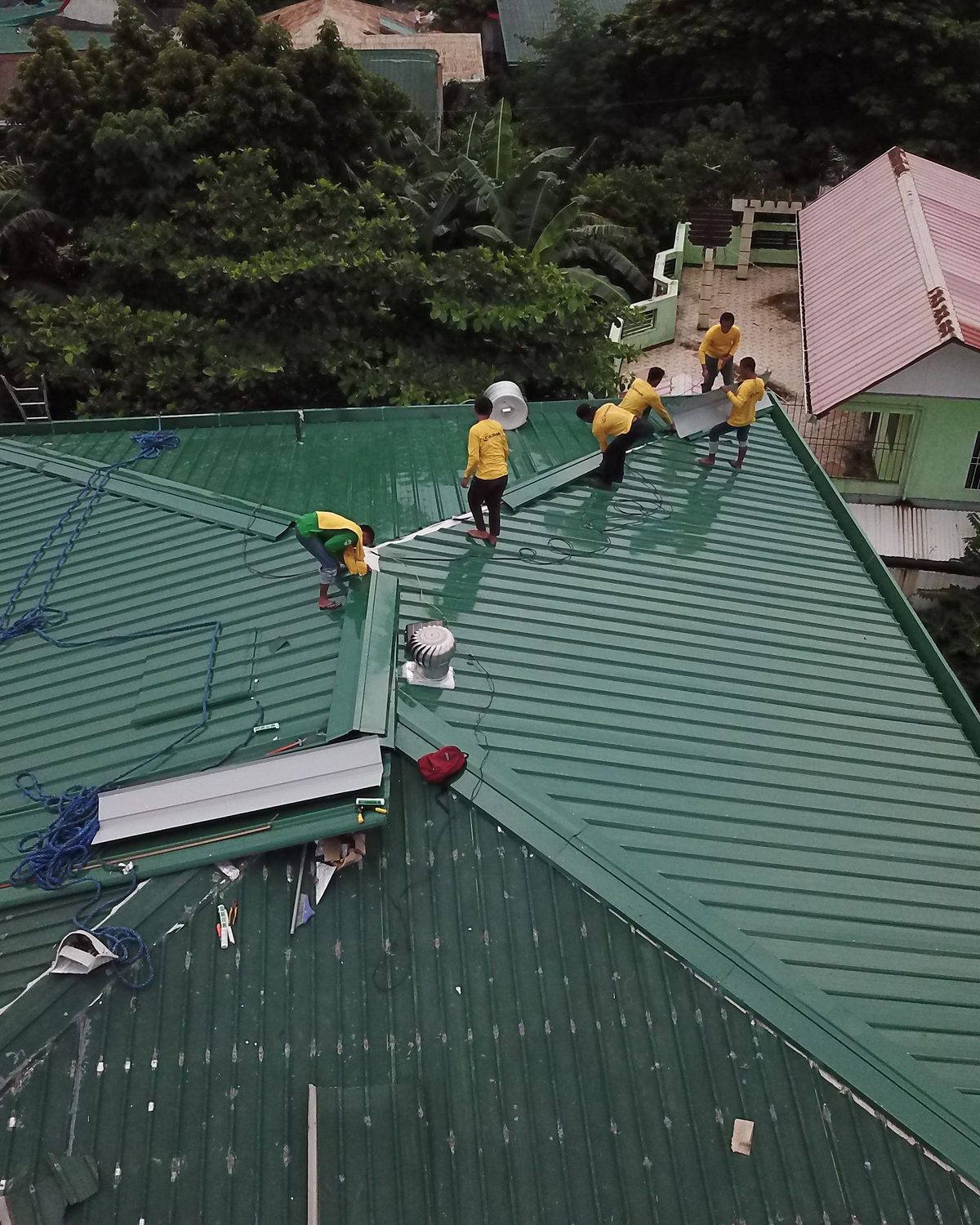
- Use a drone where walking is unsafe. Most of what matters is visible from just above.
Want the reasoning behind these checks? Read what an inspection covers and the inspection methods.
Walked by Date Roof
Common questions
How is a metal roof different to inspect?
Almost everything that matters is a joint or a fixing rather than a surface. A membrane roof fails where the material fails; a metal roof fails where two pieces meet, where something passes through, or where a fastener has stopped doing its job, and all three are inspected one by one.
- Fasteners, counted in thousands, each one a potential path
- Side laps and end laps, which move with temperature
- Penetrations, almost always added after the roof was built
- Corrosion, which starts where water sits or where coating is damaged
- Movement, because metal expands and contracts a great deal
The consequence is that a metal roof inspection is slower and more systematic than a membrane walk. You are not scanning an area for defects, you are working along lines. A roof that gets a quick visual pass and a clean report has usually not been inspected at all, only looked at from a distance.
What do failing fasteners look like?
Backed out heads standing proud, washers split, flattened or missing, rust rings around a head, and a line of them doing the same thing along one run. The last of those matters most, because a pattern points at movement rather than at individual failures.
- Heads standing proud of the panel surface
- Washers split, hardened, flattened or gone entirely
- Rust staining in a ring around the head
- An oversized or wallowed hole, which will not reseal
- A line of similar failures along one purlin run
Count them by area rather than noting that some are loose, because the count is what decides between re fastening a section and re fastening the roof. Where the pattern follows a structural line, the cause is usually thermal movement or deflection, and fixing the fasteners without addressing that will produce the same finding in two years. Mark the counted areas on the roof plan so the next inspection can compare, since the rate of change tells you more than any single count.
Where does a metal roof usually leak?
At the end laps first, then at penetrations added after the original build, then at the side laps, then at the flashings and terminations. The panel itself, out in the open, is the least likely place and the one everybody looks at first.
- End laps, which carry the water and the movement together
- Later penetrations, detailed by a trade other than roofing
- Side laps where the fixing pattern has loosened
- Ridge, hip and valley details
- Terminations at gutters, verges and abutments
Anything added after the roof was installed deserves separate attention, and on an older building that usually means extract fans, cable routes, service pipes and additional rooflights. These are where a sound metal roof most often starts letting water in, years after the panels themselves were finished and long after anybody remembers the work being done. Walk the end laps as a separate pass of their own, because they are easy to step over without ever actually looking at them.
How serious is corrosion?
It depends entirely on where it is. Surface rust on a cut edge is normal and manageable; corrosion at a lap, around a fastener or on the underside of a panel is a different matter, because by the time it is visible the section is usually further through than it looks.
- Cut edge corrosion at verges and eaves, which is common
- Corrosion around fasteners, which indicates water sitting there
- Corrosion at laps, where water is held between two surfaces
- Underside corrosion, visible only from inside the building
- Dissimilar metal contact, which accelerates everything
Look from inside as well as from above. Underside corrosion on a metal deck or on panel undersides is caused by condensation rather than by rain, which means it is a building physics problem rather than a roofing one, and treating it as a roofing problem will not stop it recurring. Photograph corroded areas against a fixed reference so the spread can be measured rather than argued about at the next visit.
Can a metal roof be walked safely?
Sometimes, and not always in the places that look safest. Panels span between purlins and are designed to carry load at the fixings rather than mid span, so where to step is a structural question that should be answered before anybody goes up rather than during the walk.
- Step over a purlin line, not in the middle of a span
- Older, thinner or corroded panels may not carry a person
- Rooflights in a metal roof are a serious fall risk
- Wet or frosted metal is extremely slippery
- Fall protection is not optional on a sloped metal roof
Where the panels are old, corroded or of unknown gauge, inspect from a safe position or use a drone rather than walking. A drone survey on a metal roof is genuinely useful because most of what matters, the lap lines and the fastener runs, is visible from above at close range, and nobody has to stand on a panel to see it.