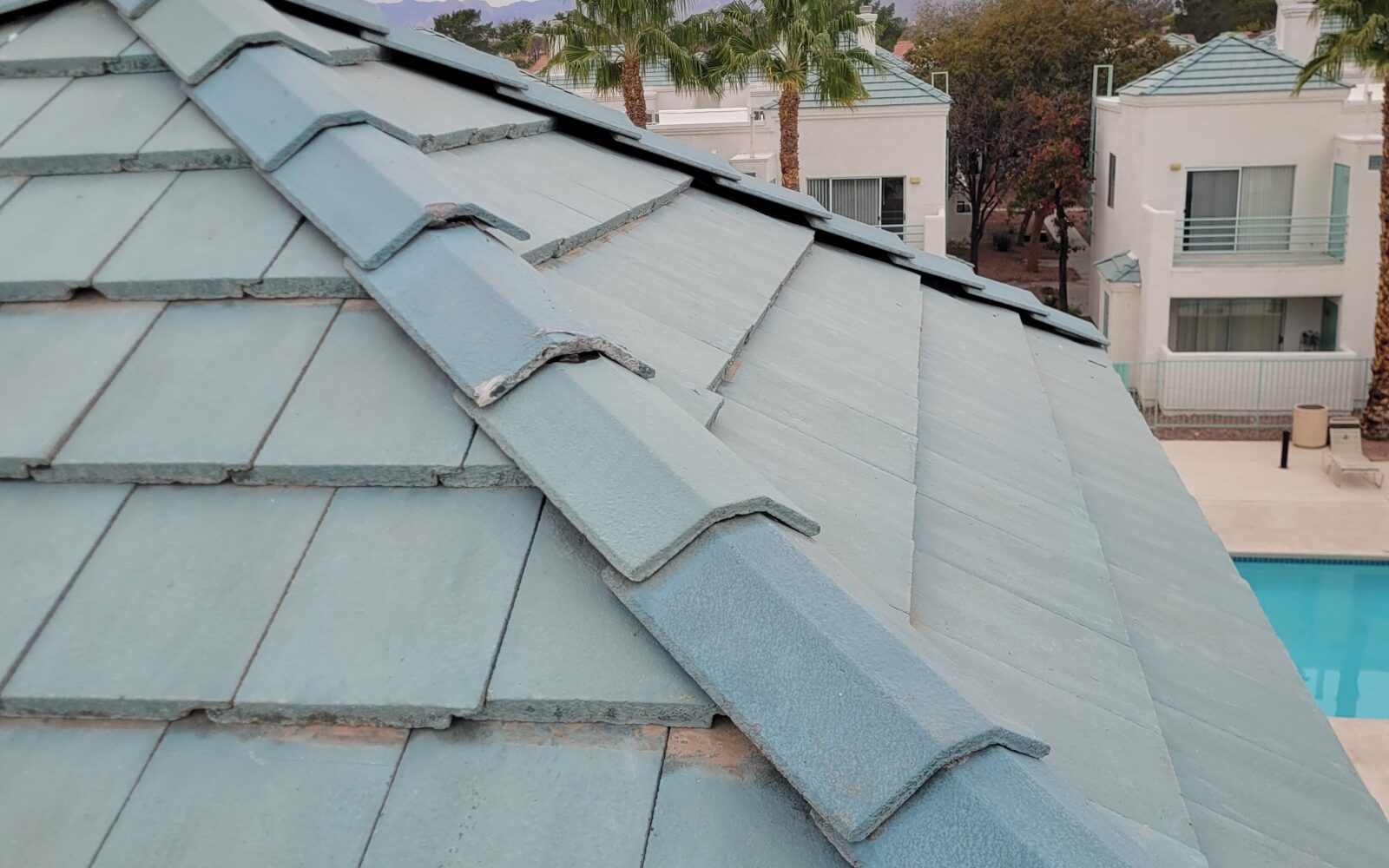
A tile roof inspection is an assessment of the layer under the tiles. Concrete, clay and slate tiles shed most of the water and take the sun, the hail and the foot traffic, but the waterproofing is the underlayment beneath them. That layer ages out long before the tiles do, so the condition of a tile roof is mostly a question about something hidden.
That changes what a useful inspection looks like. Counting broken tiles from the ground is not an inspection of a tile roof. Lifting tiles in selected places, reading the underlayment at the points where it fails first, and examining every flashing and junction is.
What gets looked at
| Element | What it is read for | Why it matters |
|---|---|---|
| Underlayment | Age, brittleness, tears, exposure | This is the waterproofing |
| Tiles | Breaks, slips, spalling, delamination | Protects the layer below |
| Fixings and battens | Corrosion, rot, failed nails or clips | Slipped tiles start here |
| Valleys | Metal condition, debris, water staining | The heaviest water load on the roof |
| Flashings | Wall junctions, chimneys, skylights | Where most tile roofs leak |
| Hips and ridges | Mortar or dry fixed condition, cracking | Wind damage shows first here |
| Penetrations | Boots, jacks, solar fixings | Each one a hole in the waterproofing |
| Underside | Staining, daylight, deck condition | Tells you how long it has been happening |
An inspector works from the perimeter inward, then down the valleys, then around every penetration, which is how areas get covered rather than sampled by accident.
Walking a tile roof
Tile can be walked safely and it can be destroyed in ten minutes. Each profile is supported in different places: a flat concrete tile takes weight across more of its area, a barrel or S shaped clay tile is strong at the lower third and fragile elsewhere, and slate is unforgiving everywhere.
Three conditions make a roof unwalkable: a brittle or discontinued tile that cannot be replaced, a steep pitch without proper access equipment, and a deck or batten structure that has already lost strength. In those cases the surface is read from a drone and the structure from inside, and the report must say which parts were examined directly.
Roof inspection methods covers how drone and infrared work fits alongside a walked survey.
Concrete, clay and slate behave differently
- Concrete tile. Heavy, durable, prone to surface erosion and to spalling in freeze and thaw climates. Color comes from a surface coating on many older tiles, so fading is normal and not structural.
- Clay tile. Very long lived, brittle with age, and hard to match once a profile is discontinued. Breakages are the main concern.
- Slate. The longest lived and the least tolerant of traffic. Delamination and failed nails are the usual findings.
- Any of them with solar panels. Each mounting point is a penetration made after the roof was built, and they deserve individual attention.
What the report should state
The finding that matters most is the state and estimated remaining life of the underlayment, given as a range with the evidence behind it: where tiles were lifted, what was found and how that compares with the roof’s age.
Alongside that, a usable report locates each defect on a plan, photographs it, grades its urgency, and separates work needed now from work that can wait. It should also list every tile broken during the visit. How to read a roof inspection report covers the structure and the phrases worth questioning.
Finding somebody who can inspect tile locally
Tile is regional. Somebody working where tile is the normal roof covering will have walked thousands of them, and somebody working where it is rare may never have lifted one. So the question to ask is not whether a firm inspects roofs but how many tile roofs they see in a year.
Ask whether they lift tiles, what they do about breakages and whether they also sell reroofing work, since the remaining life of hidden underlayment is a judgement best made by somebody with no bid riding on it.
Where to go next
If the roof is on a house you are buying or selling, residential roof inspection covers how the roof survey fits alongside the general home inspection. If the concern is a leak rather than condition, infrared roof inspection explains the method that locates trapped moisture rather than describing the surface.
Common questions
Can a tile roof be walked without breaking tiles?
Yes, by somebody who knows where to step and what the tile will take. Each profile has a strong point and a weak one, and the difference between a roof crossed safely and a trail of cracked tiles is knowledge rather than care. Some old or brittle roofs should not be walked at all.
- Step at the lower third, where the tile is supported
- Avoid the centre and the leading edge of a tile
- Flat profiles take traffic better than barrel shapes
- Brittle clay and old concrete may be unwalkable
- Breakages happen and should be reported, not hidden
Ask the question before you book, and listen for a specific answer. An inspector who has walked tile will tell you which profile yours is, where they will step and whether any area will be left to a drone or a ladder survey instead. An inspector who says it will be fine has not looked. Expect a few tiles to break on any older roof, and expect the report to say which and where, because a cracked tile left in place is a leak path that was created by the inspection.
What is under the tiles, and why does the inspection care?
Underlayment, usually on battens or directly on the deck, and it is the actual waterproof layer. Tile sheds most of the water and the underlayment handles what gets past it, which is why a roof can have perfect tiles and still be at the end of its life.
- Underlayment is the waterproofing, not the tile
- It ages from heat and sunlight through the tile
- Tile commonly outlasts the underlayment beneath it
- Its condition sets the remaining life of the roof
- Assessing it means lifting tiles in sample areas
That is the single most important thing to understand about a tile roof. The tiles may last for decades and the underlayment beneath will not, so the real question at inspection is how old that layer is and what state it is in. Establishing it means lifting tiles in selected places, at the eaves, in valleys and near penetrations where failure shows first. An inspection that never lifts a tile has described the surface and guessed at the roof, and the report should say plainly which it did.
Does a cracked or slipped tile mean the roof is leaking?
Not necessarily, and it does mean the roof is exposed. A broken tile leaves the underlayment taking direct sun and direct rain in that spot, so it will fail there sooner than everywhere else. Whether water is already getting in depends on how long it has been like that.
- A single broken tile rarely leaks immediately
- The underlayment below it ages much faster
- Slipped tiles usually mean a failed fastener or batten
- Clusters of breakages suggest traffic or impact
- Replacement tiles must match profile and thickness
The pattern tells you more than the count. A few broken tiles scattered across a roof is ordinary wear or past foot traffic. A line of them is somebody's route across the roof to an aerial or an air conditioning unit. Breakages concentrated on one slope after a storm point at hail or debris. In every case the repair is the same in kind, replacing like with like, and the useful part of the report is whether the underlayment below has already been compromised.
How often should a tile roof be inspected?
Every few years on a sound roof, and more often once it passes the middle of its expected life or after any severe storm. The reason is the material: nothing on a tile roof deteriorates quickly, but the underlayment ages continuously and invisibly, and the tiles move with weather and with traffic.
- A healthy tile roof does not need annual attention
- Older roofs justify closer and more frequent looks
- Check after hail, high wind or heavy debris
- Check before buying or selling the property
- Insurers may set their own inspection interval
The inspections worth paying for are the ones tied to a decision. Before a purchase, so the remaining life is in the price. Before a reroof is budgeted, so the scope is known. After a storm, while any damage is still attributable to the event. And ahead of a renewal where the insurer has asked about the roof. [Roof inspection for insurance](/articles/insurance/) covers what a carrier is looking for in that last case, which is condition and age rather than aesthetics.
How do I find an inspector who can handle a tile roof?
Ask three questions before booking: how many tile roofs they inspect in a year, whether they will lift tiles to assess the underlayment, and what they do with any tile they break. The answers separate somebody who inspects tile from somebody who inspects roofs generally.
- Ask for tile specific experience, not general experience
- Confirm tiles will be lifted in sample areas
- Agree what happens to breakages, in advance
- Ask whether they also sell the repairs
- Ask for a sample report on a tile roof
Independence matters as much as skill here, because the remaining life of hidden underlayment is a judgement and the person making it should not be bidding on the reroof. A sample report tells you most of what you need: whether findings are located on a plan, whether photographs show lifted areas as well as the surface, and whether the limitations section says what was not examined. [How to choose a roof inspector](/articles/roof-inspector/) covers the rest of the vetting.